
What Makes a Links Course Truly Hard
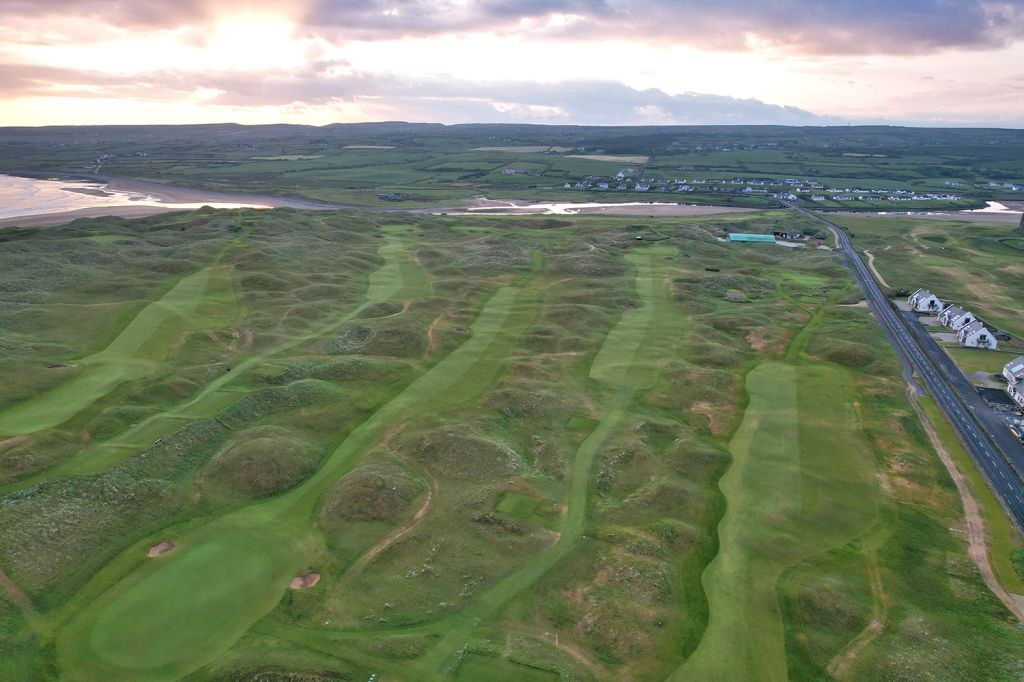
There is a difference between a golf course that is beautiful and a golf course that is hard, and nowhere is that difference more obvious than on the linksland of Britain and Ireland. A course can sit against cliffs, wrap around dunes, and photograph like a postcard while still playing, on a calm July afternoon, like a fair and generous test. True difficulty on a links has almost nothing to do with how a hole looks from a drone and everything to do with what happens when the wind gets up, the ground dries out, and the game stops being about hitting a target and starts being about surviving an environment.
Wind is the first and most obvious weapon. On a links course there is rarely a tree line to hide behind, and the same hole can play two clubs longer in the morning and two clubs shorter by mid-afternoon as the breeze swings off the sea. But wind alone does not make a course brutal; it is wind combined with firm, fast, often bone-dry turf that turns ordinary shots into genuine puzzles. A links green is designed to receive a running approach, not a high, soft dart from 150 yards, and the same humpbacked, contoured fairways that reward a well-judged bounce-and-run shot will kick a slightly mis-struck one sideways into a pot bunker or a gorse bush with total indifference to how well the club was swung. Add blind shots over dune ridges where you cannot see the flag, or in some cases even the fairway; rough that is not manicured but genuinely wild, thick with fescue, heather, and marram grass; bunkers dug so deep and revetted so sharply that a horizontal escape is sometimes the only option; and greens that run out into blank, humped surrounds where a three-putt is a mercy and a four-putt is a real possibility — and you begin to understand why the hardest links courses in the world inspire something closer to dread than admiration in the players who face them.
This is a deliberately different lens from the one used to celebrate the most spectacular modern links in the world. A companion piece on this site covering the top three links courses in the world already makes the case for jaw-dropping modern creations like Cabot Cliffs, Tara Iti, and Fancourt, three courses that are themselves ferociously difficult in their own right but exist in a different conversation. This list is about something older and more specific: the historic Open Championship gauntlet of Britain and Ireland, the roster of ancient, weather-beaten, occasionally cruel golf grounds where the game's oldest championship has been decided, and lost, more times than anywhere else on earth.
What follows is a countdown of the ten hardest of them, built around a set of difficulty ratings out of ten that reflect how these courses actually play under championship conditions, and how they have broken the best golfers alive. We start at number ten, the toughest course that still only just cracks this list, and climb, hole by punishing hole, toward the single hardest links course in the world.
10. Trump Turnberry Resort (Ailsa Course)
Turnberry's Ailsa Course opens the countdown at a difficulty rating of 9.0, and if any course on this list disguises its difficulty behind sheer beauty, it is this one. Routed along a dramatic stretch of the Ayrshire coast with the Turnberry lighthouse standing sentinel over the closing holes and the volcanic hump of Ailsa Craig visible out in the Firth of Clyde, the Ailsa Course was originally laid out by Willie Fernie in 1906, rebuilt almost from scratch by Mackenzie Ross after the land was requisitioned as an airfield during the Second World War, and refined more recently by Martin Ebert. The result is a par-70 stretching to 6,934 yards that plays every inch as long as the number suggests once the Ayrshire wind is blowing off the water.
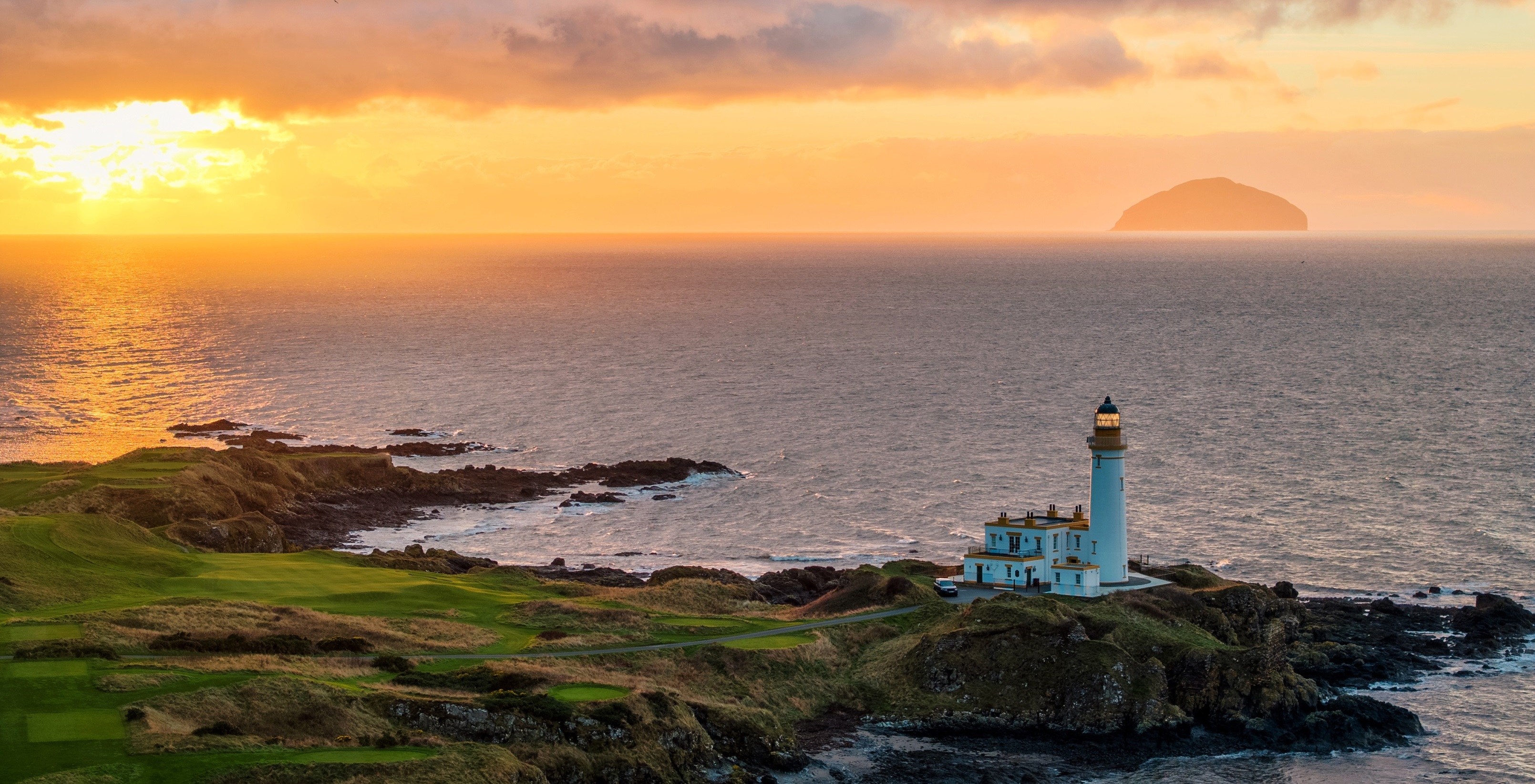
The difficulty here is concentrated in the run of holes that hug the cliffs around the lighthouse, where the fairway narrows against the rocks and a driver struck even slightly off line finds gorse, rough, or open air above the sea rather than fairway. Because so much of the course plays right along the coastline, the wind is rarely a passing factor; it is the dominant variable of every single round, dictating club selection, trajectory, and, on the wildest days, whether a shot travels forward at all. Turnberry demands a kind of controlled aggression that very few resort courses ask for: play too safely and the course's own length and firm run-off areas will eat rounds alive; play too boldly into the wind off the cliffs and the penalty is often a lost ball rather than a lost stroke.
Turnberry's most famous test came in the 1977 Open Championship, remembered simply as the 'Duel in the Sun', when Tom Watson and Jack Nicklaus played the final two rounds essentially in isolation from the rest of the field, trading birdies in one of the greatest head-to-head duels in major championship history until Watson prevailed by a single stroke. That duel has come to define Turnberry's identity: a course beautiful enough to frame it, but hard enough, in benign weather, to still produce that kind of scoring warfare, and vicious enough in foul weather, as it showed again in 1986, 1994, and 2009, to humble the same caliber of player completely.
What keeps Turnberry at the more forgiving end of this list, relatively speaking, is that its difficulty is legible. The dangers are visible, the lines are mostly clear, and a player who respects the wind and the cliffs is rewarded. That fairness is part of what makes it a beloved Open venue rather than a feared one, and it is exactly why nine courses on this list are considered harder still.
9. Royal Dornoch Golf Club
Royal Dornoch shares Turnberry's 9.0 rating, but it earns that number through an entirely different kind of difficulty: not spectacle, but sheer, uncompromising naturalness. Golf has been played on this stretch of Highland coastline since at least 1616, making the ground on which Royal Dornoch sits one of the oldest golf sites anywhere in the world, and the club's design lineage runs through Old Tom Morris, longtime secretary John Sutherland, and Donald Ross, the Dornoch native who went on to shape American golf architecture more than perhaps any other single figure. The course that survives today, a par-70 measuring 6,722 yards, is routinely described by architecture purists as the most natural links course on the planet.

The difficulty at Dornoch is subtle and cumulative rather than dramatic. The land itself does most of the work: fairways run over natural humps and hollows shaped by wind and sea rather than by earthmoving equipment, and the plateau greens, elevated and often domed, reject anything but a precisely judged approach. A shot that would hold on a flatter, softer green will run through a Dornoch green and off the back, into rough or a hollow that leaves an awkward recovery. Because the course sits so remotely in the Scottish Highlands, the wind arrives raw and unfiltered off the North Sea, and because the terrain is so unaltered, there are few flat stances and few straightforward lies; players are constantly adjusting their swing to the ground beneath them rather than to a manufactured, level surface.
Dornoch's remoteness is itself part of its mystique and its difficulty. It has never hosted the Open Championship, in large part because of its far-northern location, but its reputation among the game's most discerning judges, players and architects alike, is as high as any course in the world. Tom Watson, among others, has spoken of Dornoch in the same breath as the very best courses he ever played, and Ben Crenshaw and other architecture devotees have made the pilgrimage north specifically to study how a course this natural can be this demanding. There is no single infamous hole or collapse associated with Dornoch the way there is with some of the courses further down this list; its terror is quieter, built hole after hole from plateau greens that refuse to accept an imperfect shot and a wind that never lets a player relax.
What makes Dornoch essential to any conversation about the hardest links in the world is precisely that it achieves its difficulty without a single artificial trick. Every yard of trouble here was carved by wind, sea, and time, long before any architect arrived to formalize what nature had already built.
8. Royal Lytham & St Annes Golf Club
Royal Lytham & St Annes, rated 9.1, is the great exception on this list, and that is exactly why it is so hard. Every other course here occupies open, dramatic coastal or dune terrain; Lytham, opened in 1886 and shaped over the decades by George Lowe Sr., Harry Colt, and C.K. Cotton, is hemmed in by Victorian red-brick houses and a railway line rather than by cliffs or crashing surf. There is no sweeping sea view to distract you here. Instead there is a tight, claustrophobic, relentlessly punishing test squeezed into a residential corridor on the Lancashire coast, a par-70 playing to 6,955 yards that has hosted The Open Championship twelve times.

The course's central quirk sets the tone for everything else: there is not a single par 5 on the front nine, which means the outward half offers almost no birdie relief and instead demands accuracy and patience from the very first tee shot. That accuracy is tested by more than 200 bunkers scattered across the property, an extraordinary density that turns Lytham into less a round of golf than a minefield walk, where even a well-struck shot that drifts a few yards off target can find sand deep enough to cost a stroke or more. Because the course is boxed in by housing and rail lines rather than open ground, there is little room for error laterally; missing a fairway here does not mean finding rough with a clear recovery, it often means finding one of those 200-plus bunkers or being genuinely blocked out by out-of-bounds stakes running along garden fences.
Lytham's most cherished moment of golf history is also its best illustration of how a great player can turn its chaos into brilliance. During the final round of the 1979 Open Championship, Seve Ballesteros, playing with the swashbuckling improvisation that defined his career, drove into a temporary car park on the 16th hole. Rather than a disaster, the wayward drive became legend: Ballesteros was given a free drop, hit a bold approach onto the green from an unlikely angle, and made birdie en route to winning his first Open Championship at just 22 years old. The moment cemented Lytham's reputation not merely as a hard course but as a stage where the line between disaster and heroism is often just a matter of nerve.
That duality is what makes Lytham so tough to prepare for. Its difficulty is not primarily physical, the way a long, wind-exposed course punishes with sheer distance; it is psychological and positional, a constant negotiation with more than 200 bunkers and a claustrophobic corridor that offers no easy outs and, on the front nine especially, no par-5 breathing room at all.
7. Royal Birkdale Golf Club
Royal Birkdale, rated 9.1, takes a completely different route to nearly the same level of difficulty as Lytham. Opened in 1889 and shaped through the work of George Lowe, Frederick Hawtree, and J.H. Taylor, Birkdale sits among towering dune valleys on the Lancashire coast, and its defining architectural feature is that individual holes are routed through and around those dunes so that, standing on almost any tee, a player sees only the hole in front of them. There is a real sense of isolation to Birkdale's routing, hole after hole feeling self-contained, cut off from its neighbors by walls of marram-grass-covered sand.
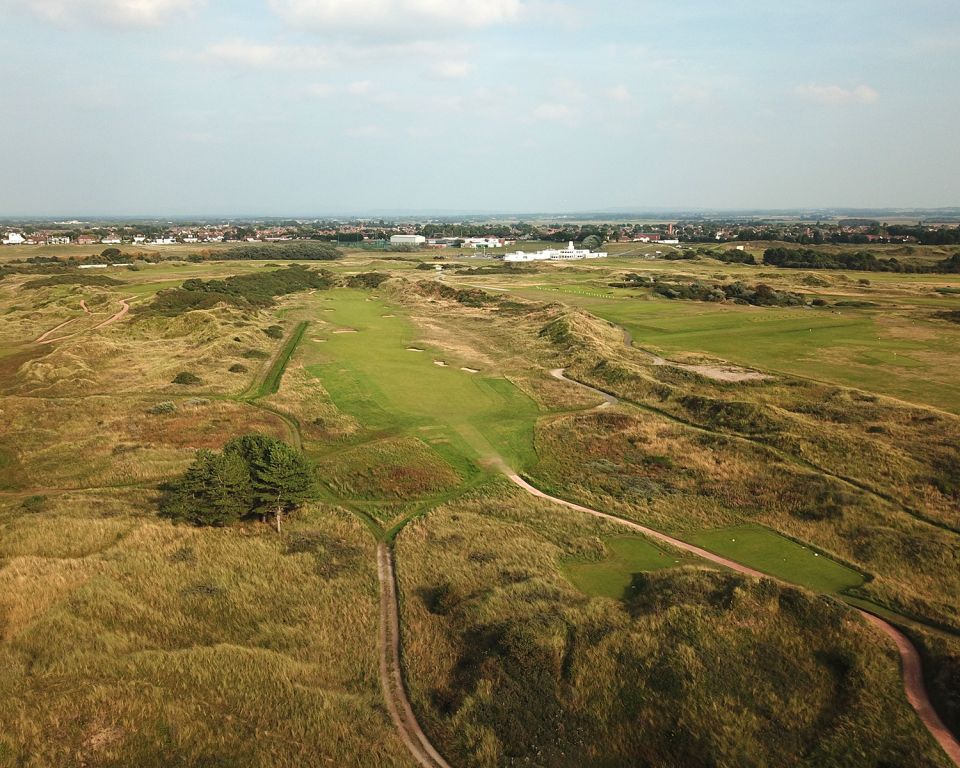
That self-contained quality is a big part of what makes Royal Birkdale, at a par-70 stretching to 7,156 yards, such a respected but genuinely fearsome test. Unlike some links where a wayward shot might scramble along the ground into an adjacent fairway, at Birkdale a shot that leaves the intended corridor is swallowed by the dune wall itself, often leading to a blind or semi-blind recovery from thick, wiry rough on a steep, sandy slope. The valley-floor fairways are relatively generous by links standards, which is precisely why Birkdale has such a strong reputation for fairness even amid its difficulty; the challenge comes from precision off the tee to find those valley corridors and from controlling distance into greens that sit, in classic Hawtree and Taylor fashion, tucked among the dunes with subtle, sometimes brutal contours.
Ten Open Championships have been staged at Birkdale, a run of history that includes some of the most respected champions in the game's history and, repeatedly, some of the toughest final rounds in wind that funnels unpredictably through the dune valleys. Because each hole plays in relative isolation from the others, the wind's effect can feel almost erratic from hole to hole, calm in one dune-sheltered valley and howling on the very next tee once the corridor opens toward the Irish Sea. That inconsistency is itself a test of adaptability that separates Birkdale from more uniformly exposed links.
Architecturally, Birkdale is often held up as the model of what a fair but brutal links course should look like: virtually no genuinely unfair or blind hazards, no reliance on trickery, simply huge, beautiful, punishing dunes and a course that asks golfers to hit fairways and greens with total conviction, hole after individually demanding hole, for eighteen holes in a row.
6. Royal Liverpool Golf Club (Hoylake)
Royal Liverpool, universally known as Hoylake, carries a 9.2 difficulty rating, and it earns that number by proving that a links course does not need towering dunes to be terrifying; it can do the job with flatness, exposure, and a single sinister internal boundary. Opened in 1869 on the Wirral peninsula along the Dee Estuary, and shaped over time by Robert Chambers, George Morris, and later Donald Steel, Hoylake is a par-72 that now stretches to a substantial 7,312 yards, making it one of the longest courses on this list even before the wind off the estuary is factored in.
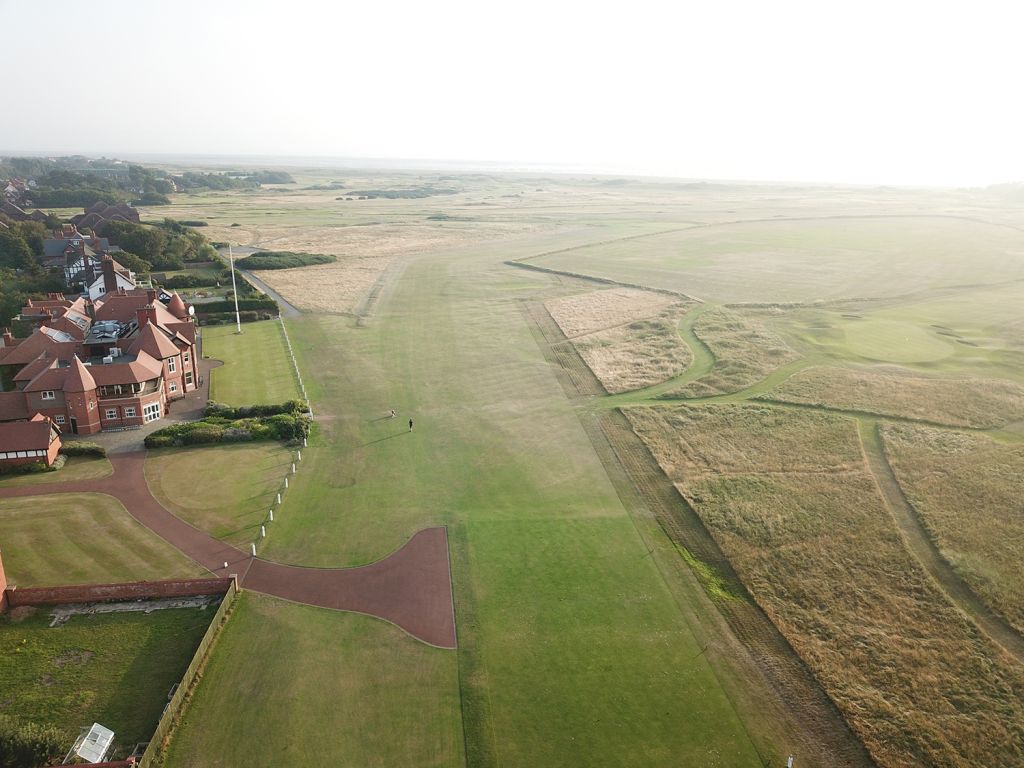
Because Hoylake's terrain is comparatively flat and open to the Dee Estuary, there is nowhere on the course to escape the wind; unlike a dune-sheltered links, where a player might find brief respite tucked between ridges, Hoylake exposes every shot to whatever the estuary is sending across the property that day. The course's most notorious feature, though, is not natural at all: an internal out-of-bounds boundary known as 'The Cop', a raised bank and wall that runs along part of the course and turns certain tee shots into genuine risk-reward gambles, since straying even slightly off line does not just mean rough, it can mean an out-of-bounds penalty in the middle of the golf course itself, a rarity in top-level competitive golf. Combined with narrow fairways that offer little forgiveness for a driver hit even a touch off its intended line, Hoylake demands a discipline that few other Open venues require in quite the same way.
That discipline was on full display in the most famous modern chapter of Hoylake's history, the 2006 Open Championship. With the course baked bone-dry that summer and the narrow fairways at their most unforgiving, Tiger Woods largely abandoned his driver, choosing instead to work the ball around Hoylake with irons and fairway woods off the tee, prioritizing position over distance in a strategic masterclass that showed just how much the course's narrowness and its extra hazard of The Cop reward restraint over power. Woods won going away, and the performance has become a touchstone example of how a truly hard links course can be conquered not by overpowering it but by respecting exactly what makes it dangerous.
With thirteen Open Championships now in its history, Hoylake stands as proof that difficulty on a links does not require spectacular topography. Flat, firm, exposed ground, a genuinely punishing internal boundary, and fairways that leave almost no margin for error are more than enough.
5. Royal Portrush Golf Club (Dunluce Links)
Royal Portrush's Dunluce Links, rated 9.2, brings this countdown to Northern Ireland and to some of the most dramatic dune terrain anywhere in these islands. Designed by H.S. Colt and opened in 1929, the Dunluce Links runs along the Antrim coast within sight of the Giant's Causeway, through a landscape of towering, tumbling dunes that Colt shaped into one of the most celebrated routings in golf architecture. At a par-71 measuring 7,349 yards, it is also one of the longest courses on this entire list, adding sheer physical demand to its already formidable terrain.
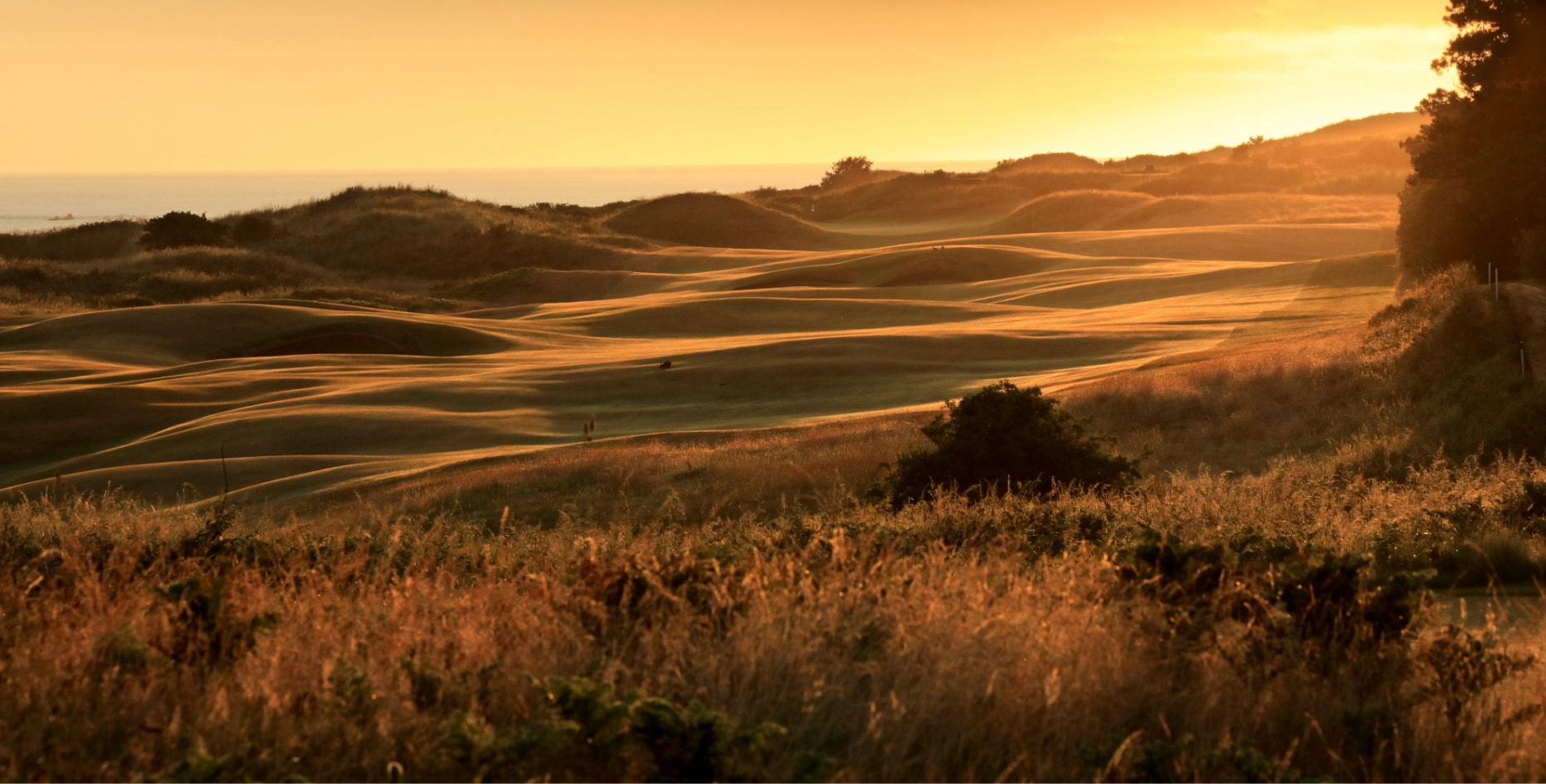
What makes Portrush so difficult is the sheer scale and severity of Colt's dune routing: fairways run along, over, and between huge sandhills, tee shots must often carry or thread between dune ridges to find safe ground, and the greens sit in settings so dramatic that missing them, even by a small margin, frequently means a recovery shot from a steep, tightly-mown or heavily rough-covered slope. Combined with its considerable length, Portrush asks players to hit long, accurate shots into a landscape that offers very little flat, forgiving ground anywhere on the property. The coastal wind, sweeping in off the causeway coast, adds yet another layer, bending long approach shots off line in a way that a shorter course would never allow to matter quite so much.
Portrush's place in Open Championship history carries an extraordinary story of its own. The course hosted the Open in 1951, becoming the first and, for decades, only course outside mainland Great Britain to do so. It would then wait an astonishing 68 years before the Open returned in 2019, a comeback that was one of the most emotionally charged moments in recent major championship history, with massive crowds greeting the championship's long-awaited return to Northern Irish soil and Shane Lowry winning in front of a home crowd amid scenes of genuine celebration. That 68-year gap, and the roar that greeted the championship's return, have only deepened Portrush's mystique as a course that combines historic pedigree with a modern, thoroughly proven test.
Few courses on this list pair beauty and brutality quite as seamlessly as Portrush. The dunes that make it one of the most photographed courses in the world are the very same dunes that make missing a fairway here a genuinely frightening proposition, and that combination is exactly why it sits so high on a list built around difficulty rather than aesthetics alone.
4. Royal Troon Golf Club (Old Course)
Royal Troon's Old Course, rated 9.3, is home to one of the most famous and feared single holes in all of golf, but it would be a mistake to think its difficulty begins and ends there. Opened in 1878 and developed through the work of George Strath, Charles Hunter, and James Braid, Troon plays to a par-71 across 7,172 yards on the Ayrshire coast, and its defining structural challenge is a front nine that plays predominantly downwind followed by a back nine that turns directly into the prevailing wind, transforming the closing stretch into one of the most exhausting finishes in championship golf.
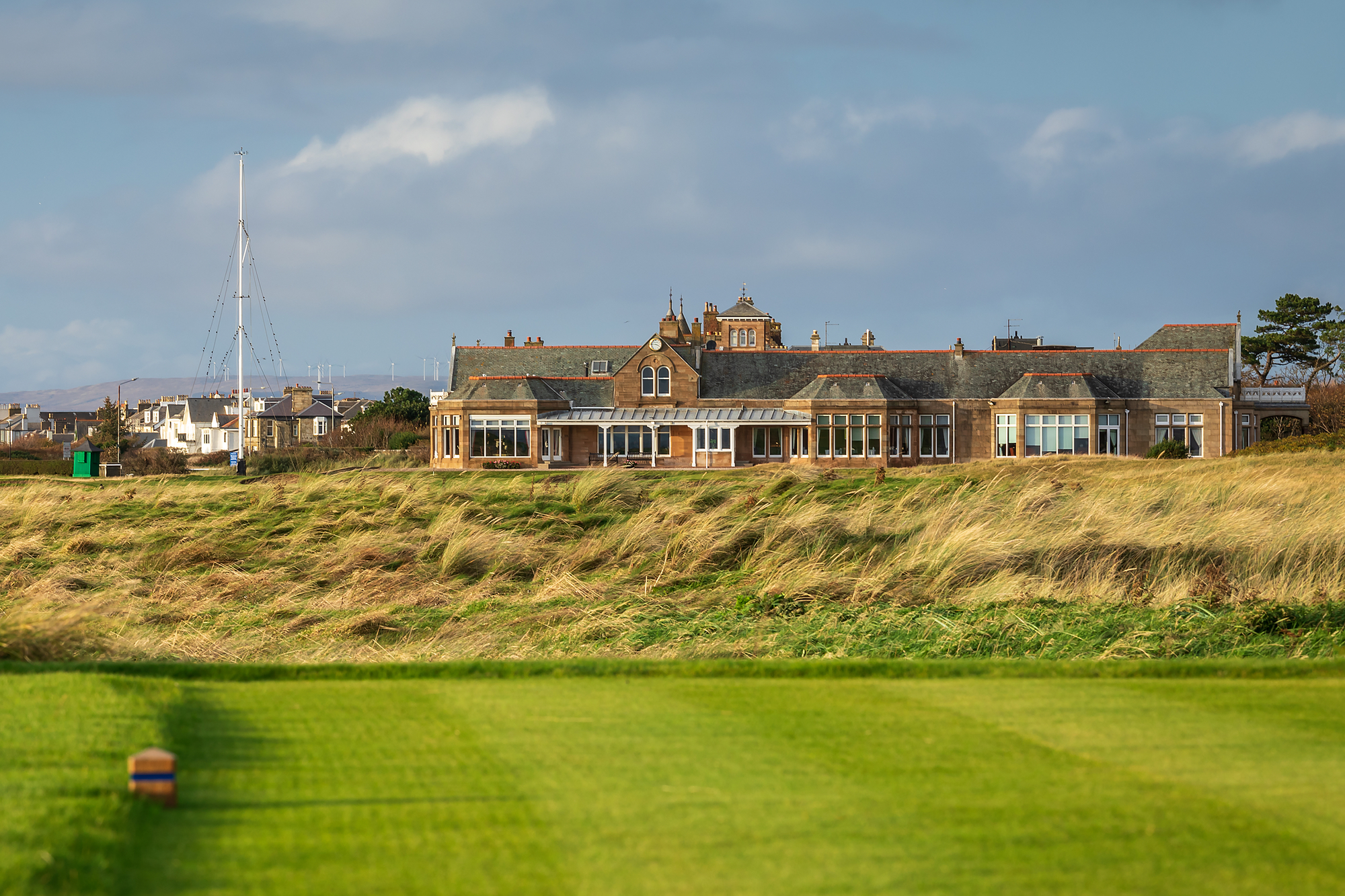
The hole that defines Troon in the popular imagination, though, is the 8th, known universally as the 'Postage Stamp'. At roughly 123 yards, it is astonishingly short by the standards of championship golf, and on paper it should be one of the easiest holes on the course. In practice it has wrecked rounds and reputations for well over a century: the green is tiny and perched, surrounded by deep, steep-faced bunkers that swallow anything even slightly off line, and the coastal wind whipping across the exposed green makes club selection on what is nominally a simple short iron shot into a genuine guessing game. Professionals have taken numbers in double figures on the Postage Stamp, and the hole's combination of minimal length and maximal terror has made it one of the most analyzed and feared par 3s in the sport.
Beyond the Postage Stamp, Troon's real cumulative difficulty comes from that back-nine turn into the wind. A player can play the front nine at Troon with the breeze at their back, card a promising number, and walk to the 10th tee believing the course has been tamed, only to discover that the same wind now stands directly in the way of every approach shot coming home. That reversal, repeated hole after hole on the back nine, has undone countless contenders across Troon's nine Open Championships, turning what looked like a comfortable position into a stumbling finish.
It is this one-two combination, an iconic, terrifying short hole that can blow up any scorecard regardless of skill level, paired with a genuinely draining, into-the-wind closing stretch, that puts Royal Troon at number four on this list. Few courses ask a player to summon both delicate precision and sheer physical resolve within the same eighteen holes quite as demandingly as Troon does.
3. Muirfield (The Honourable Company of Edinburgh Golfers)
Muirfield, home of the Honourable Company of Edinburgh Golfers, carries a 9.4 difficulty rating and a claim to history that no other course on this list, or arguably in the world, can match: the club dates back to 1744, making it the oldest golf club in the world with written rules, predating even the Old Course at St Andrews as a formally organized golfing institution. The course itself, shaped through the work of Old Tom Morris, H.S. Colt, and Tom Simpson, sits on the East Lothian coast and plays to a par-71 measuring 7,245 yards.
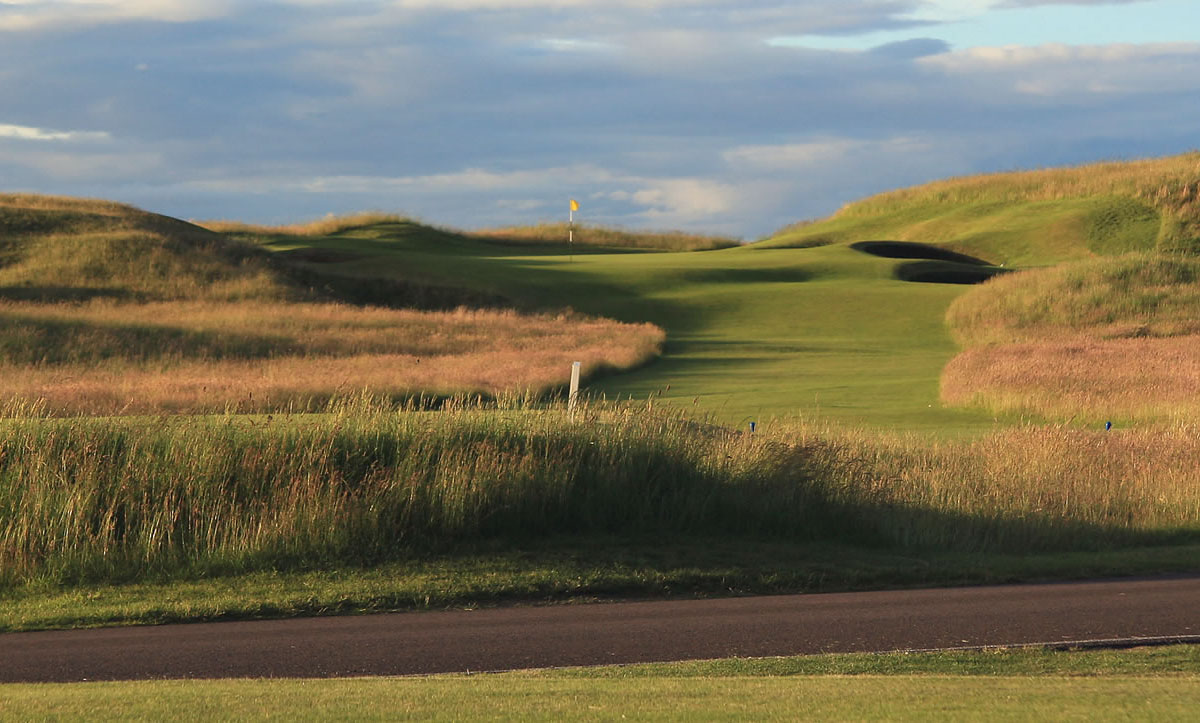
Muirfield's defining architectural signature is its famous 'concentric loop' routing: rather than playing out along the coast and back in a straight line, as many older links do, Muirfield's two nines loop around the property in opposite directions, which means the wind direction relative to the hole being played changes constantly and unpredictably throughout the round. A player might face a headwind on one hole and a helping crosswind two holes later, with no long, predictable stretch in any single direction to settle into a rhythm. This is precisely why so many architects and players regard Muirfield as the fairest, purest examination of complete shot-making in golf: there are virtually no blind shots anywhere on the course, nothing hidden or tricked-up, simply an honest, visible target on every hole and a set of genuinely world-class, unforgiving bunkers and gnarly rough waiting for anything less than a well-struck shot.
That purity is exactly what makes Muirfield so difficult. There is nowhere to hide behind an excuse of an unfair or blind hazard; every misjudged shot at Muirfield is entirely the player's own doing, visible from tee to green, and the course's bunkering is deep and precisely positioned to punish exactly the kind of shot a slightly nervous or fatigued player is most likely to hit. With sixteen Open Championships in its history, more than any course on this list besides the very top spot, Muirfield has built a reputation among the players themselves as the sternest true test of complete golf in the rotation, a course that rewards not one particular strength but an all-around command of every shot in the bag.
Muirfield's difficulty, in other words, is difficulty of the highest and most respected kind: nothing unfair, nothing hidden, just a relentlessly shifting wind and bunkering precise enough to expose the smallest technical or mental flaw in a golfer's game, hole after hole, in whichever direction the wind happens to be blowing that particular afternoon.
2. Royal County Down
Royal County Down, rated 9.5, is widely considered by rankings panels, architects, and touring professionals alike to be among the very best golf courses on earth, and it earns that praise for precisely the same reasons it earns its position this high on a list of the hardest. Opened in 1889 and shaped by Old Tom Morris, Harry Vardon, and H.S. Colt, the course sits on Dundrum Bay in County Down, Northern Ireland, framed by the Mountains of Mourne rising dramatically behind the links. At a par-71 measuring 7,186 yards, its yardage alone understates just how demanding the course actually plays.

The course's central and most notorious feature is its extraordinary reliance on blind tee shots. Repeatedly through the round, players must fire drives over dune ridges thickly lined with gorse and heather without being able to see the fairway they are aiming for, trusting a line pointed out by a caddie or memorized from a previous round rather than anything visible in front of them. This is a fundamentally different, older style of design philosophy than Muirfield's insistence on total visibility, and it produces a completely different, arguably even more nerve-wracking, kind of pressure: the fear not just of hitting a bad shot but of hitting what feels like a good shot and having no idea, for several tense seconds, whether it has found the fairway or vanished into unforgiving gorse on the other side of the ridge.
Compounding the blind tee shots are County Down's bunkers, among the most feared in world golf: deep, sleepered pits reinforced with wooden railway-sleeper walls, positioned exactly where an errant shot is most likely to finish, and demanding, once a ball is in one, an escape that often sacrifices any hope of saving par. Combined with thick gorse and heather rough lining nearly every fairway, County Down offers almost no margin between a shot that finds the fairway and one that finds real, potentially card-wrecking trouble.
Royal County Down has never quite carried the sheer volume of Open Championship history that some other courses on this list can claim, but among architects, top professionals, and golf travelers who have played it, it is frequently cited as the most complete, beautiful, and terrifying links experience in the world, a course where the Mountains of Mourne provide a stunning backdrop to some of the most genuinely frightening tee shots in the game.
1. Carnoustie Golf Links
At the very top of this list, with a difficulty rating of 9.8, sits Carnoustie Golf Links on the Angus coast of Scotland, a course whose reputation among players has earned it the nickname 'Car-nasty'. Golf has been played on this ground since 1842, and the course itself, shaped over generations by Allan Robertson, Old Tom Morris, and James Braid, has grown into a par-72 measuring 7,421 yards, making it one of the longest venues in Open Championship history. Length alone would make Carnoustie demanding; combined with everything else the course throws at a player, it becomes something closer to a trial by ordeal.
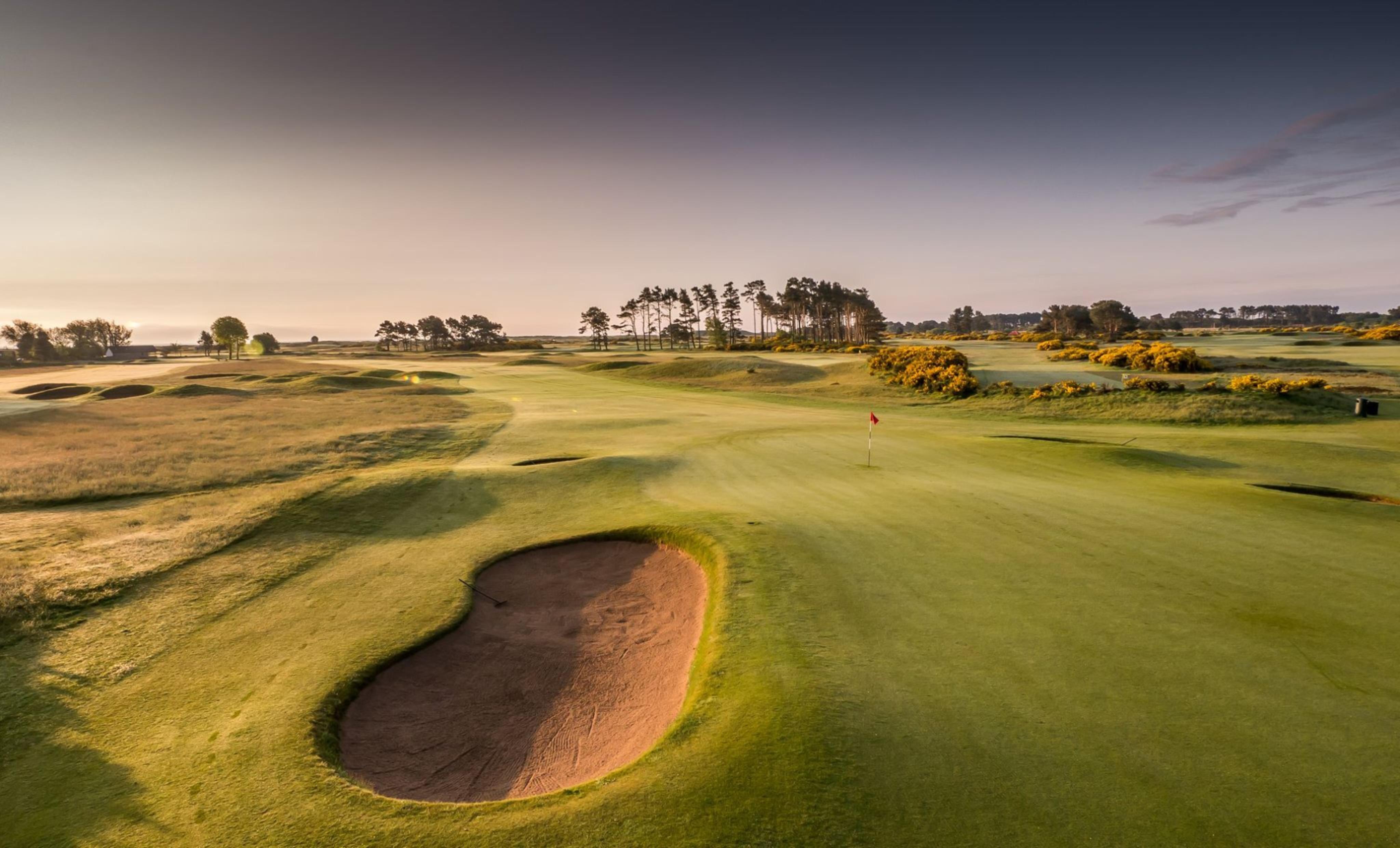
Carnoustie's defining hazard is the Barry Burn, a meandering stream that snakes across the course and, crucially, through the closing holes, crossing the fairway of the 18th not once but multiple times in a winding path that leaves almost no safe angle for a player under pressure. The course's bunkers are deep and sheer-faced throughout, its rough thick and unforgiving, and its overall character is one of relentless accumulation: there is no single easy hole to recover on, no stretch where a tired or rattled player can simply coast, and by the time a contender reaches the final hole with a lead to protect, Carnoustie has usually already tested every part of their game and their nerve.
The single most famous illustration of Carnoustie's capacity for destruction came in the final round of the 1999 Open Championship. Jean van de Velde arrived at the 18th hole needing only a double bogey six to win the Claret Jug outright, a comfortable enough margin by any reasonable standard. What followed instead became one of the most agonizing collapses in the history of golf: an errant tee shot, a bold and ultimately disastrous decision to go for the green from trouble, a ball that struck a grandstand and bounced back into further difficulty, and eventually a shot into the Barry Burn itself, where van de Velde famously removed his shoes and socks and waded in to consider playing the ball from the water before ultimately taking a drop. He recovered brilliantly enough, from there, to make a putt for a triple-bogey seven, forcing a playoff that he would go on to lose to Paul Lawrie, but the sequence of events on that single hole has become the defining cautionary tale in professional golf, endlessly replayed as the ultimate example of how quickly Carnoustie, and the Barry Burn in particular, can turn a coronation into a catastrophe.
Eight Open Championships have been played at Carnoustie, and nearly every one of them has produced some version of the same lesson: length, deep and sheer bunkering, thick rough, and above all the Barry Burn's constant, winding presence through the finish combine to make this the single hardest test in the historic rotation. No other course on this list asks so much, for so long, and punishes a single lapse in concentration quite so completely as Carnoustie does on its final few holes.
The Common Thread
Looking back across all ten of these courses, from Turnberry's clifftop drama down to Carnoustie's punishing finish, a clear pattern emerges. None of them rely on artificial length alone, and none of them rely on a single gimmicky hole to earn their reputation. Instead, each combines several of the same fundamental elements, wind that never fully relents, ground firm and fast enough to turn a good shot into a bad outcome, bunkering deep and precisely placed enough to punish even a small miss, and rough or blind terrain that removes any margin for a lapse in concentration, into a complete and coherent test that has been proven, refined, and occasionally cursed by generations of the best golfers alive.
It is also worth noting how much these ten courses owe to the same handful of architects and the same layer upon layer of history. Old Tom Morris appears in the design lineage of several of them; James Braid, H.S. Colt, and Harry Vardon appear repeatedly as well. These were not courses designed once and left untouched; they have been shaped, reshaped, and stress-tested by more than a century of championship golf, which is exactly why they continue to produce moments like the Duel in the Sun, Seve's car park heroics, Tiger's driver-less masterclass at Hoylake, and Jean van de Velde's agonizing walk into the Barry Burn. Difficulty, on these ten courses, is not an abstraction. It has a documented history of humbling the greatest players of every generation, and that history is precisely what gives these grounds their weight.
For travelers drawn to this side of golf, the pursuit of the hardest rather than simply the prettiest, this list is only a starting point. A full course guide and a dedicated course finder tool exist elsewhere on this site for anyone looking to plan a trip through this historic gauntlet, hole by punishing hole, for themselves.
More From the Journal
Rankings
The Top 3 Links Golf Courses in the World
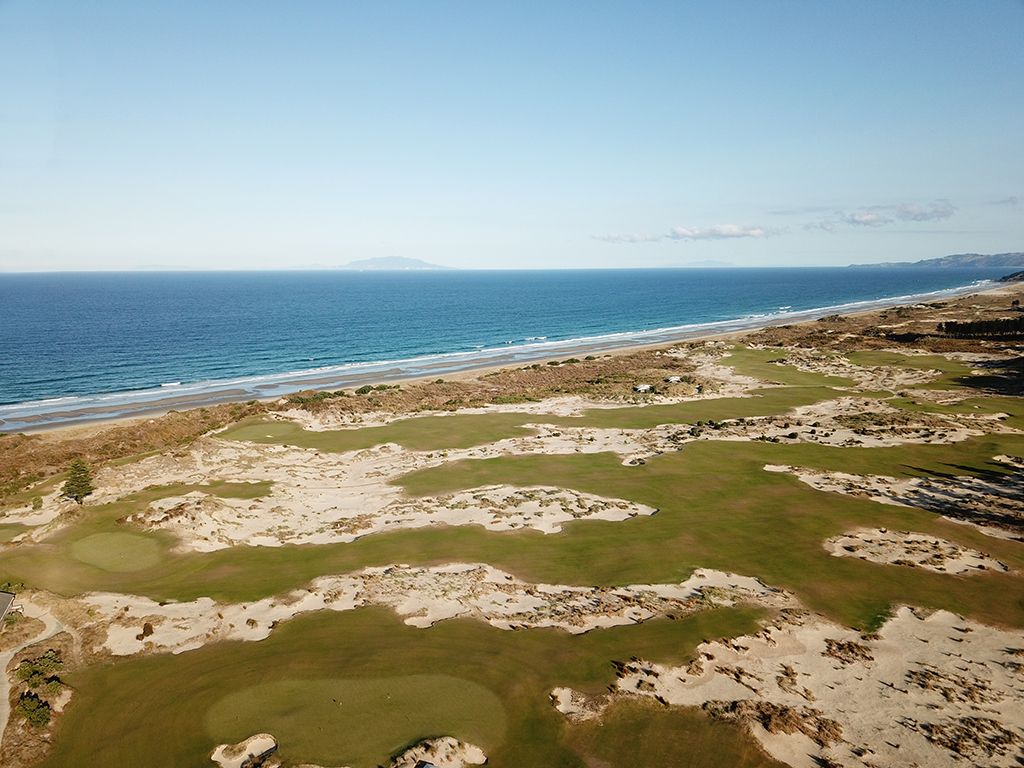
From the cliffside drama of Cabot Cliffs in Nova Scotia to the wind-carved dunes of Tara Iti in New Zealand and Gary Player's inland links masterpiece at Fancourt — our pick of the three greatest links courses on the planet.
Links Golf 101
What Makes Links Golf So Special?
Wind that never blows the same way twice, ground so firm the ball runs forever, greens that punish the smallest miss — why links golf is unlike any other version of the game.